Cultural Platform
2024
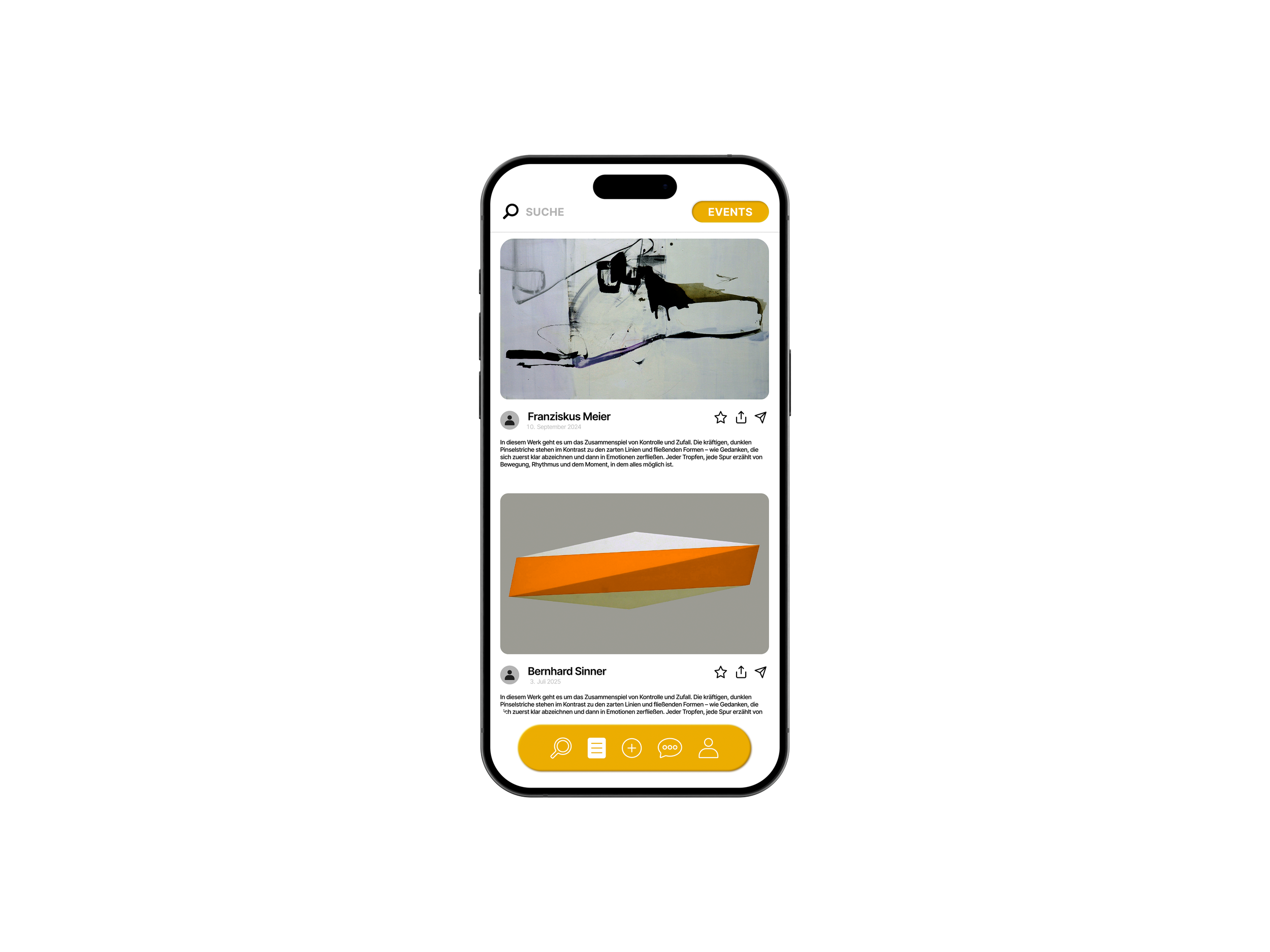
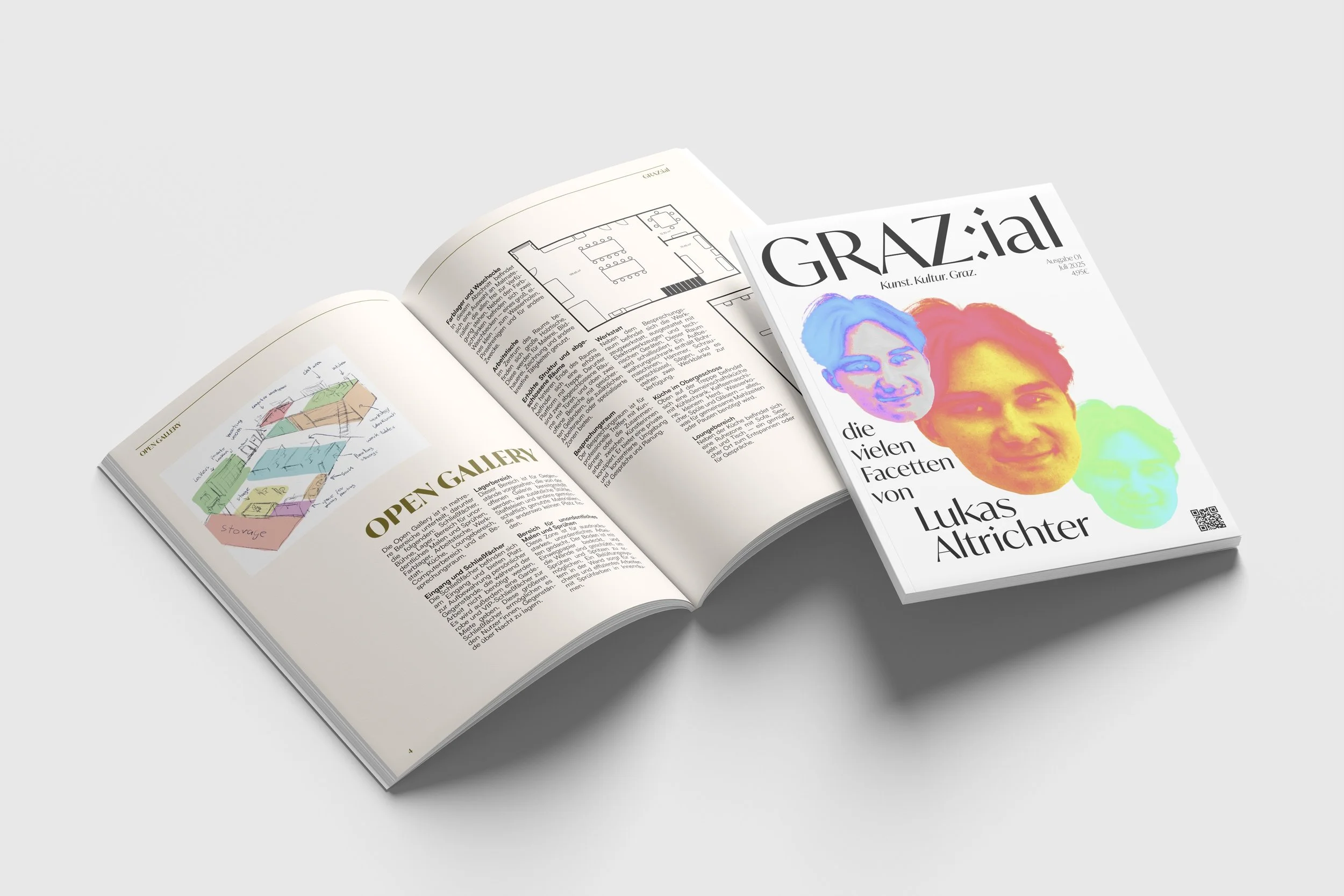
This project was created as part of my User Interface Design course (IND23) with a team of 17 students. The goal was to design a cultural platform that could reconnect people across Graz’s art and cultural scene — a response to reduced funding and the growing disconnect between smaller creative communities. I took on the role of project lead and coordinator, overseeing research, data analysis, and concept development while ensuring visual and structural cohesion throughout the process. Alongside managing the team, I led the design of the Open Gallery section — a digital exhibition space that complemented the main app and accompanying print medium, all developed to strengthen community, accessibility, and connection through thoughtful design.
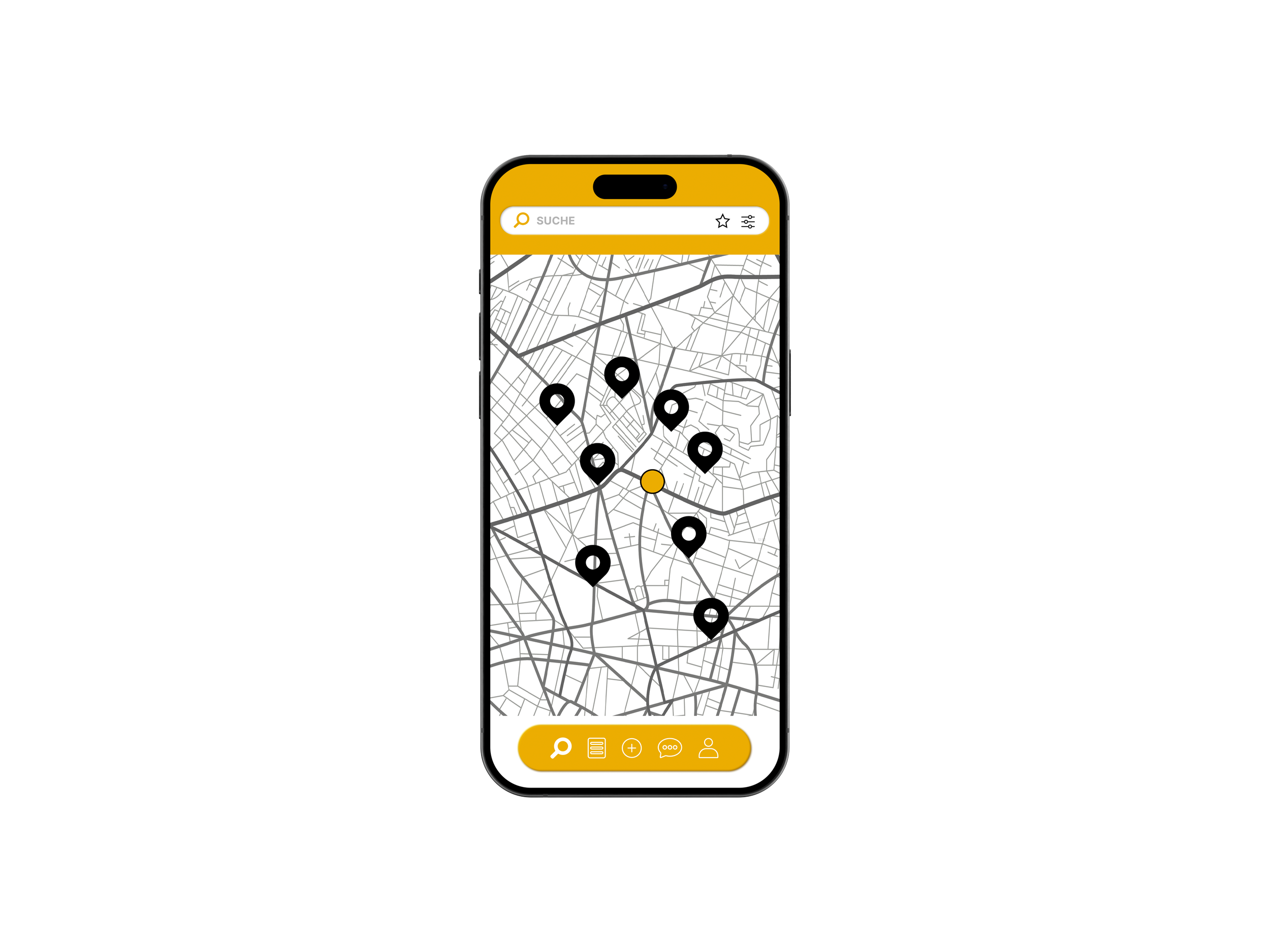
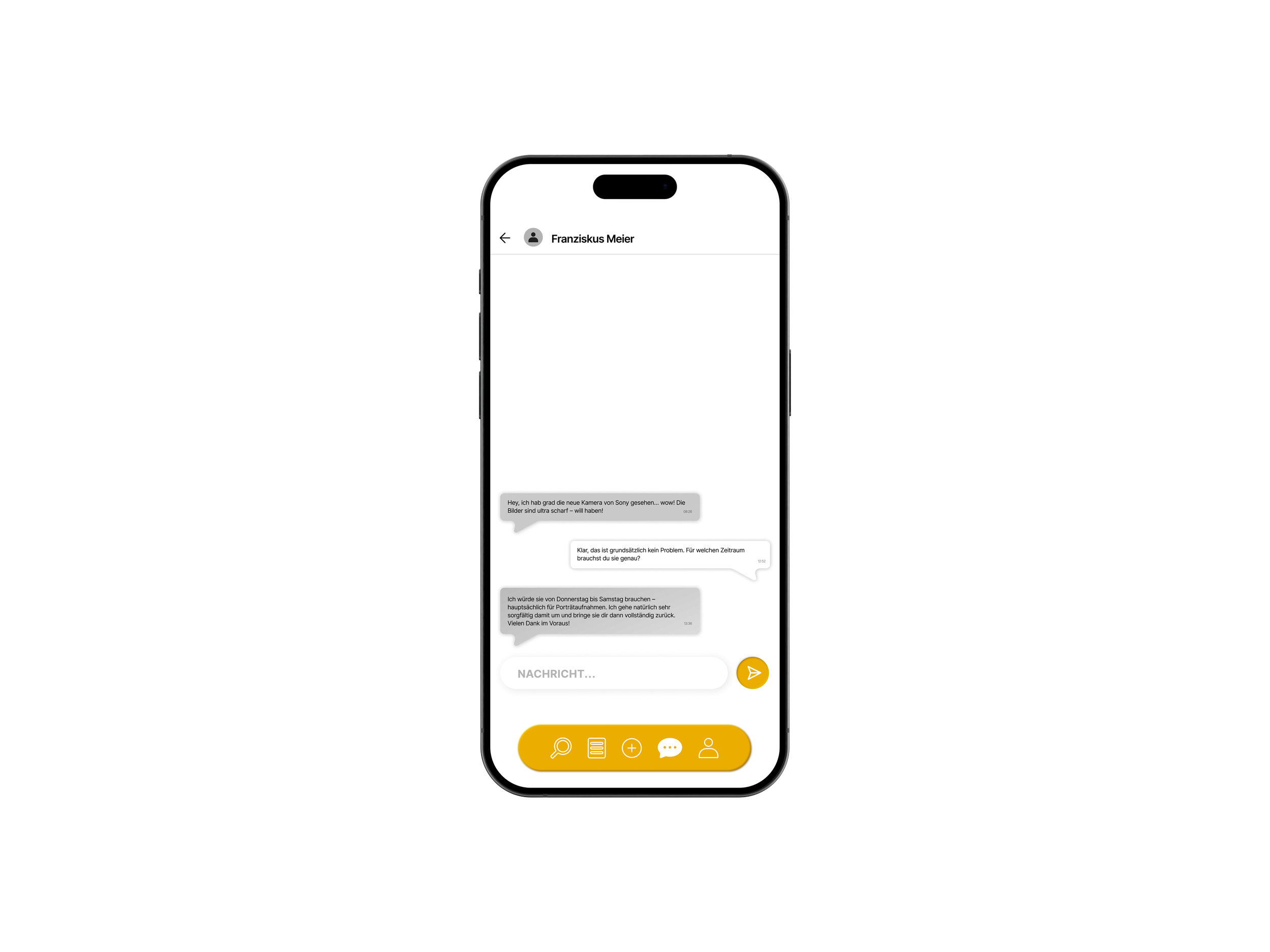
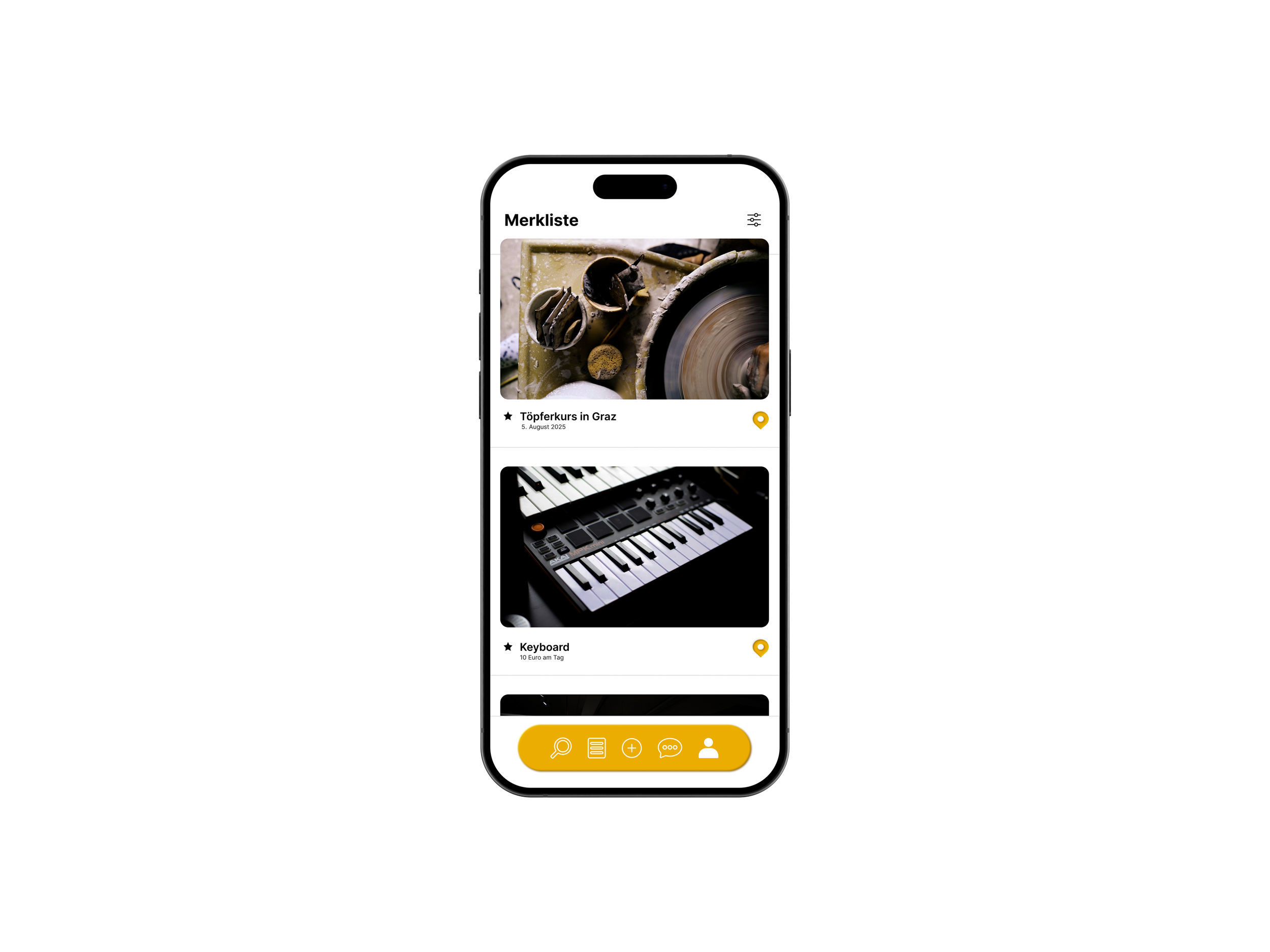
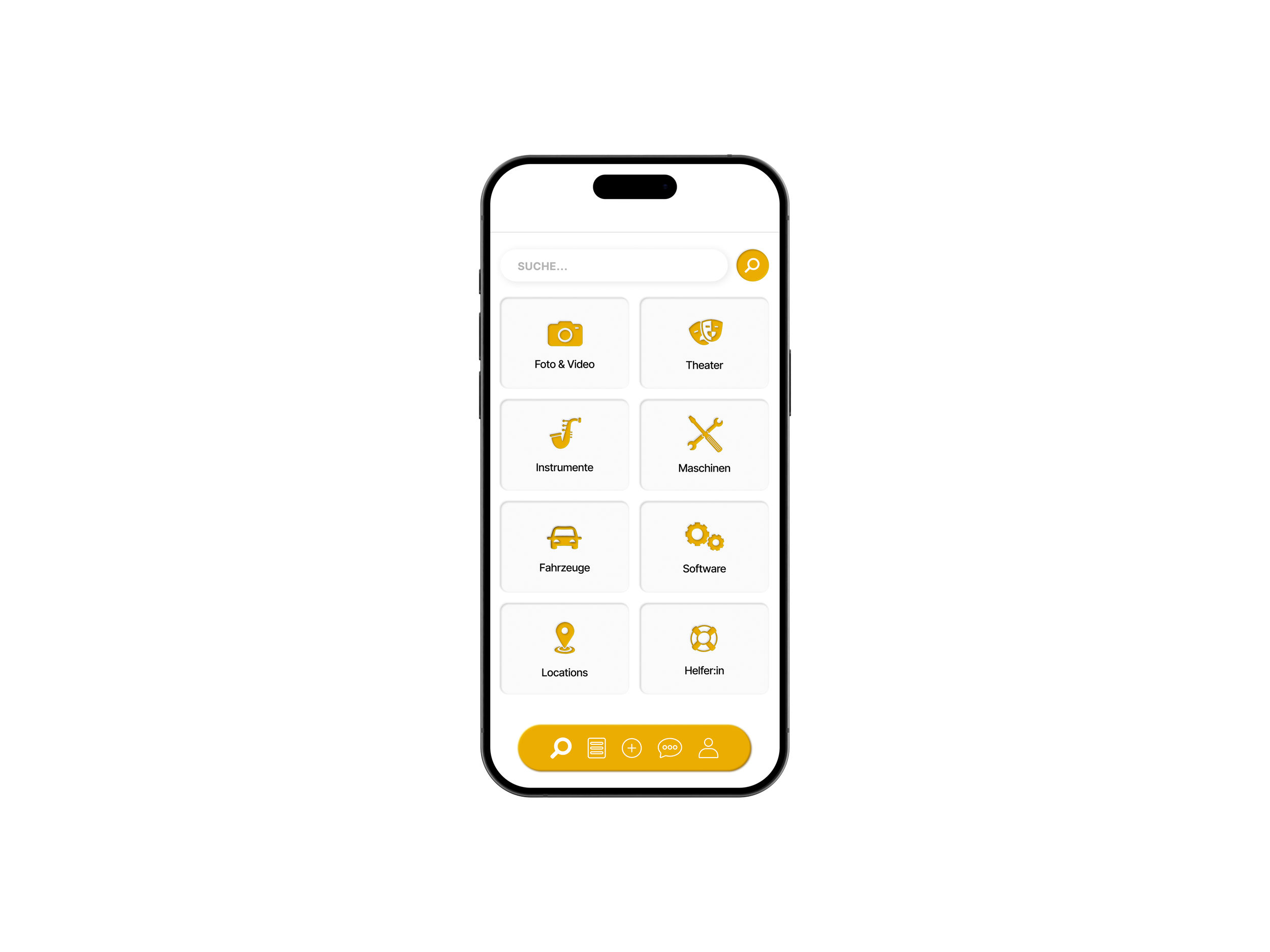
The app concept was designed as a digital meeting point for Graz’s creative community — a place where users could discover local events, exhibitions, and initiatives, and connect directly with artists and cultural spaces. Its interface focused on accessibility and clarity, ensuring anyone could navigate it with ease regardless of background or technical skill.
Key features included an interactive event map showing upcoming cultural happenings across the city, a personalized feed that adjusted to users’ interests, and dedicated artist profiles where creators could share their work, exhibitions, and collaborations. A built-in community board encouraged dialogue and exchange — allowing users to post open calls, volunteer opportunities, or creative projects seeking collaboration. The overall goal was to create a digital space that didn’t just inform but actively fostered connection and participation within Graz’s art scene.
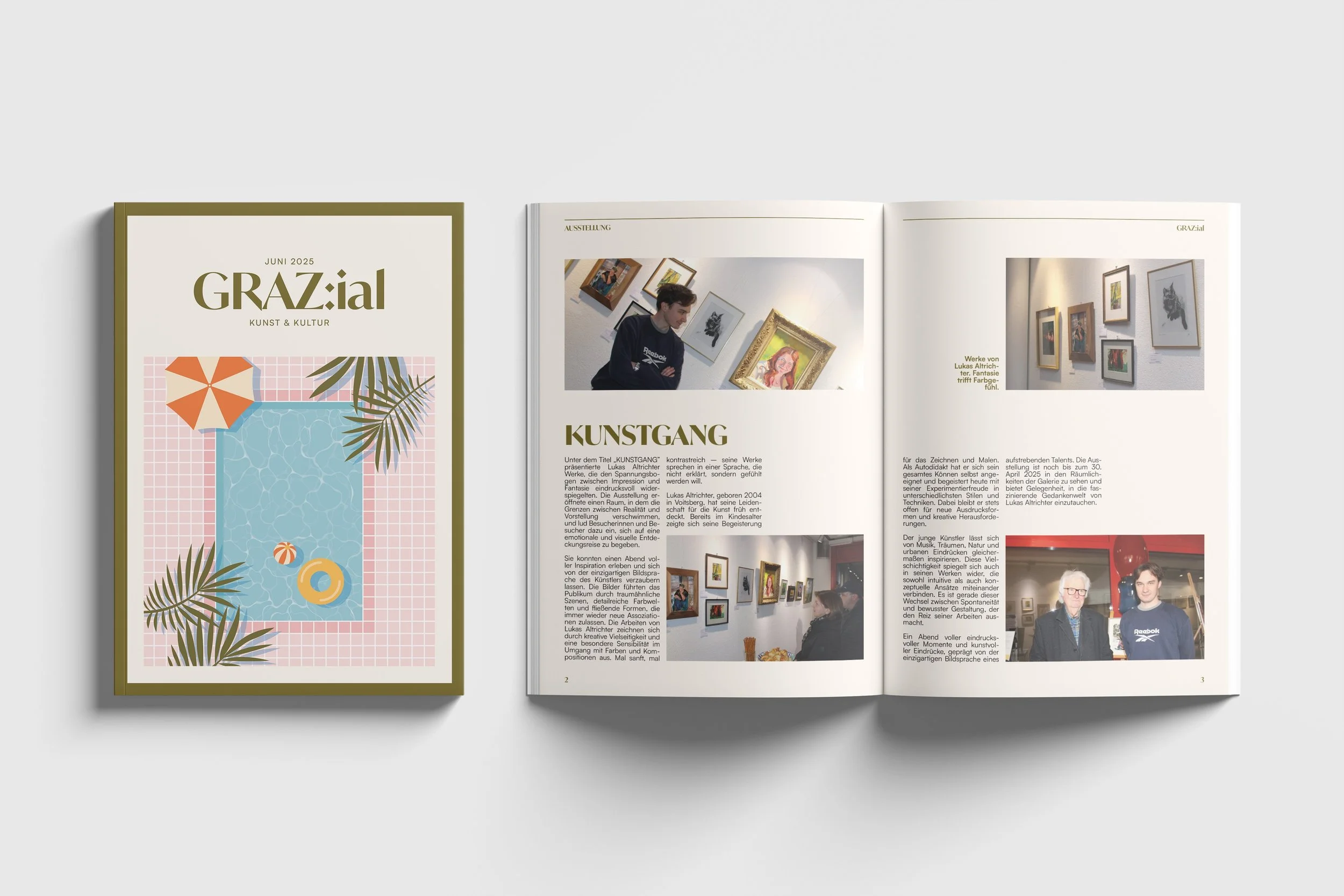
Alongside the digital components, we also explored a print medium as a tangible counterpart to the app. It served as both an informative and visual anchor — a physical artifact that promoted the platform while celebrating local art and culture through design.
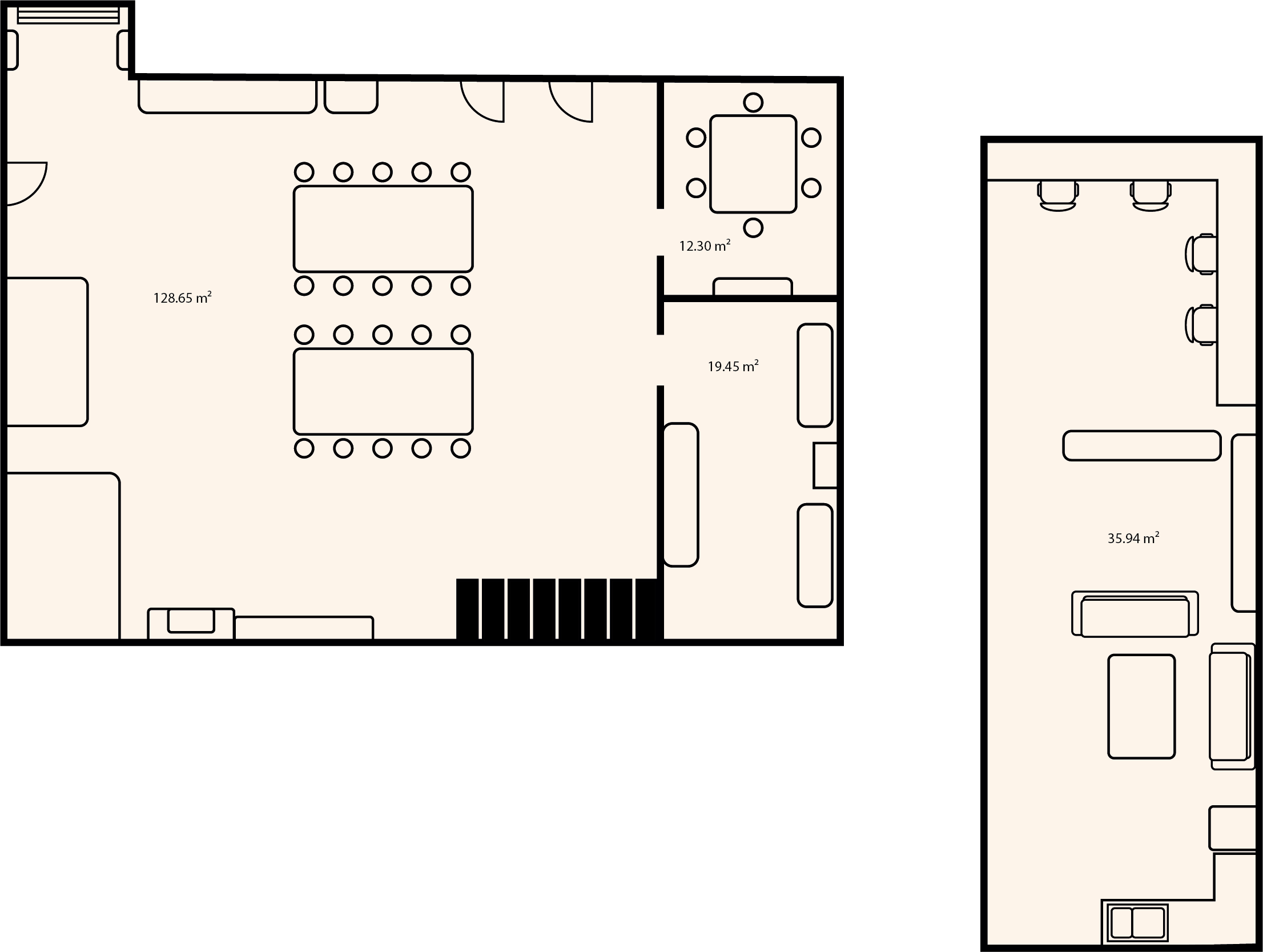
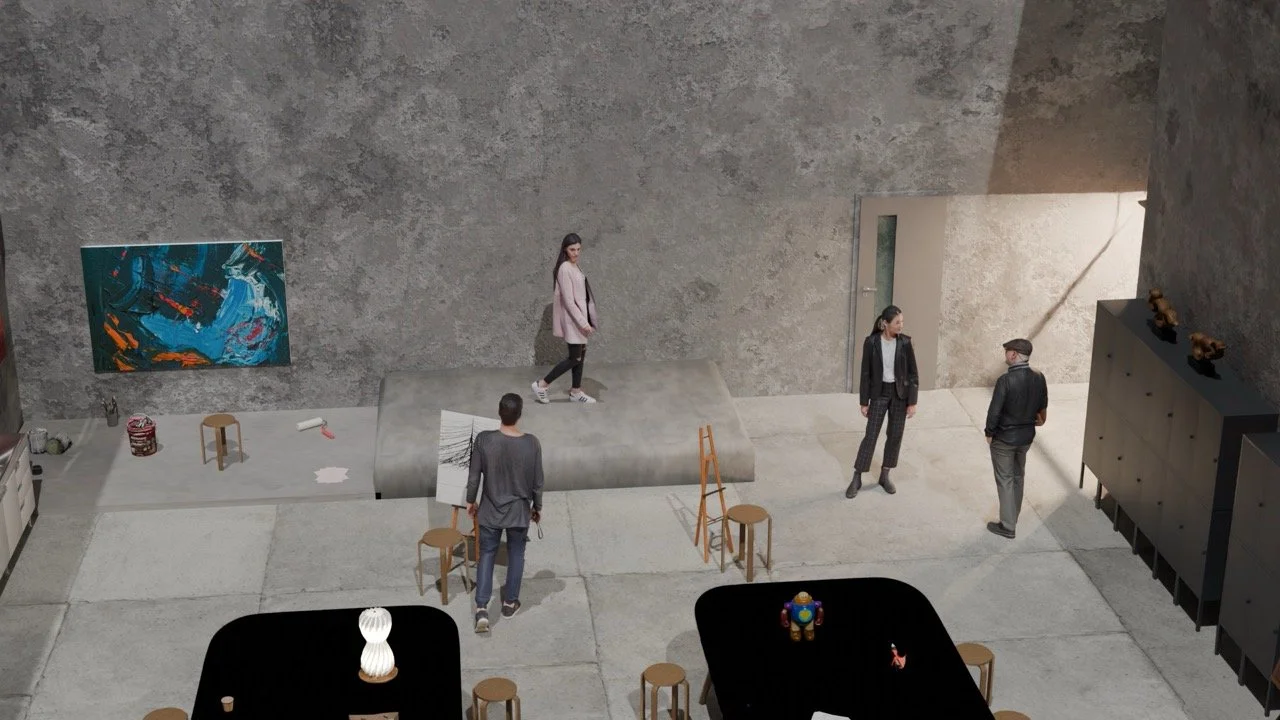
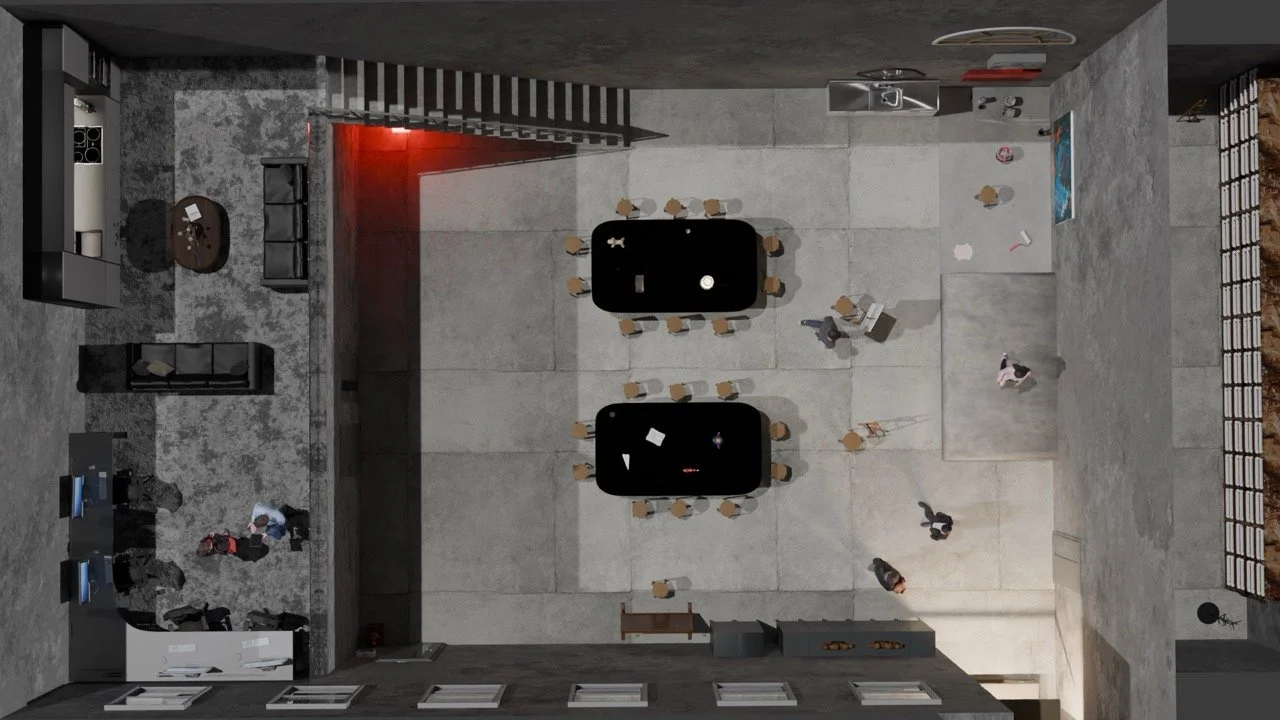
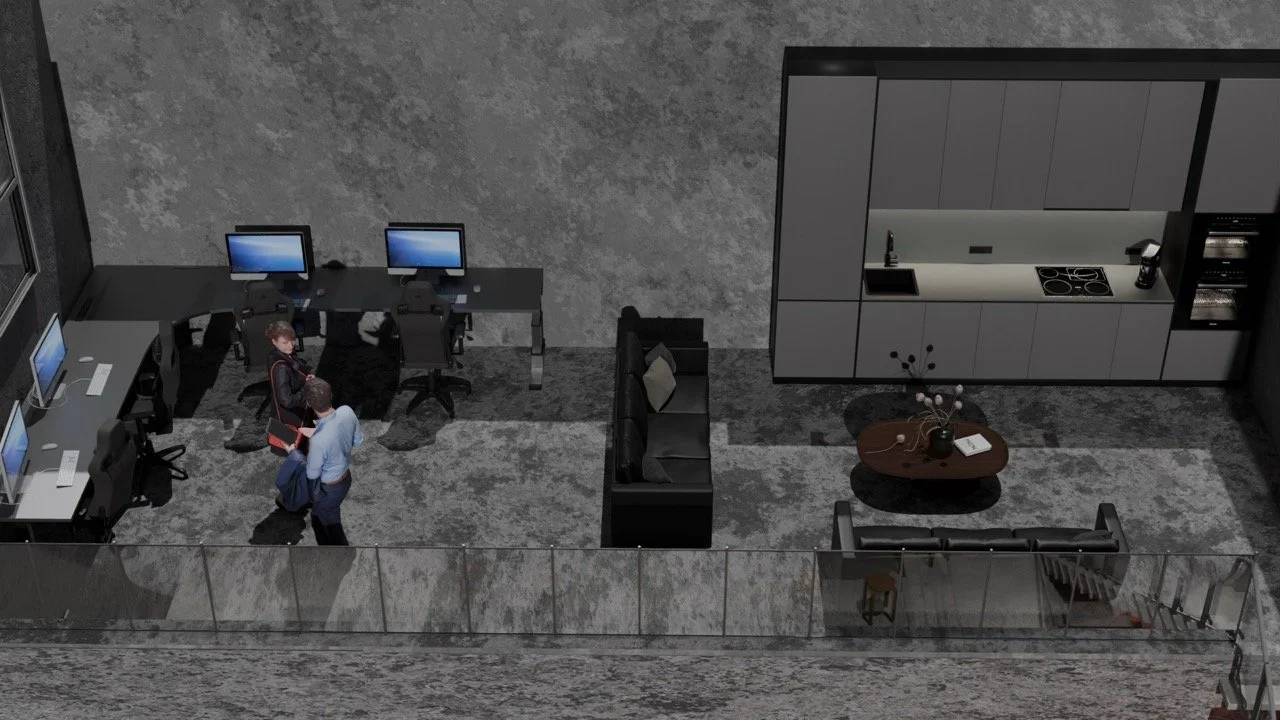
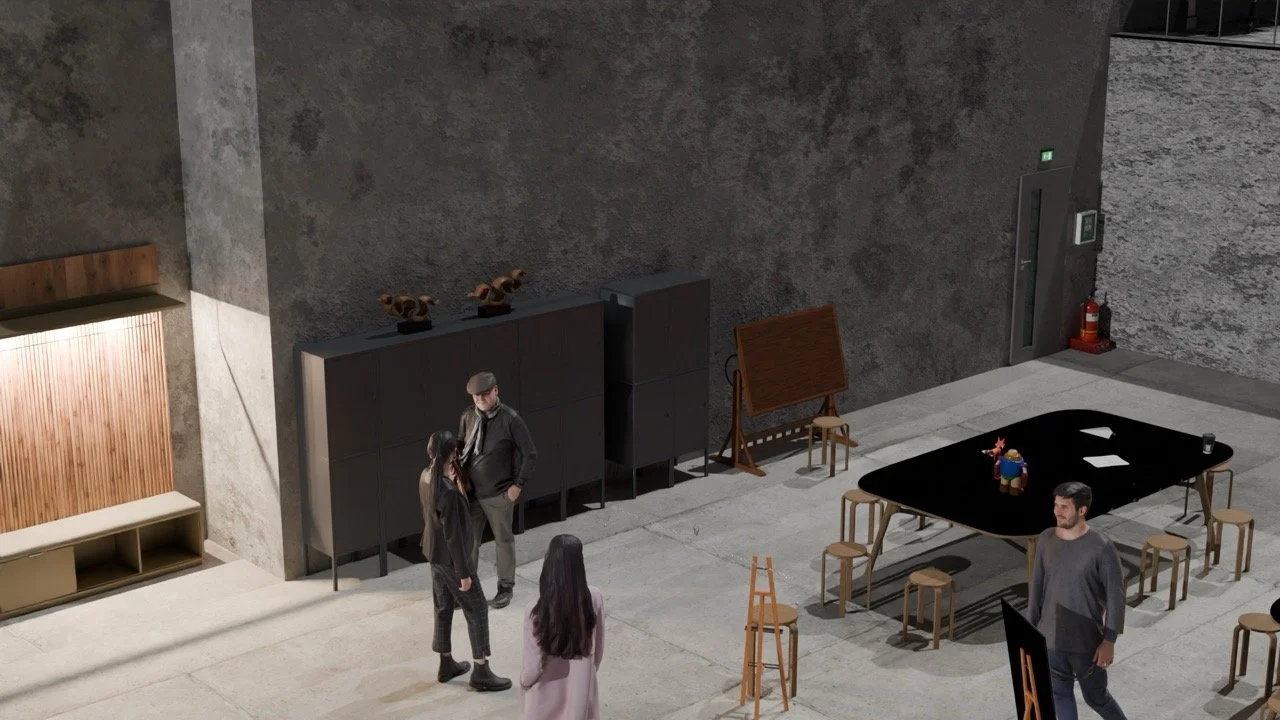
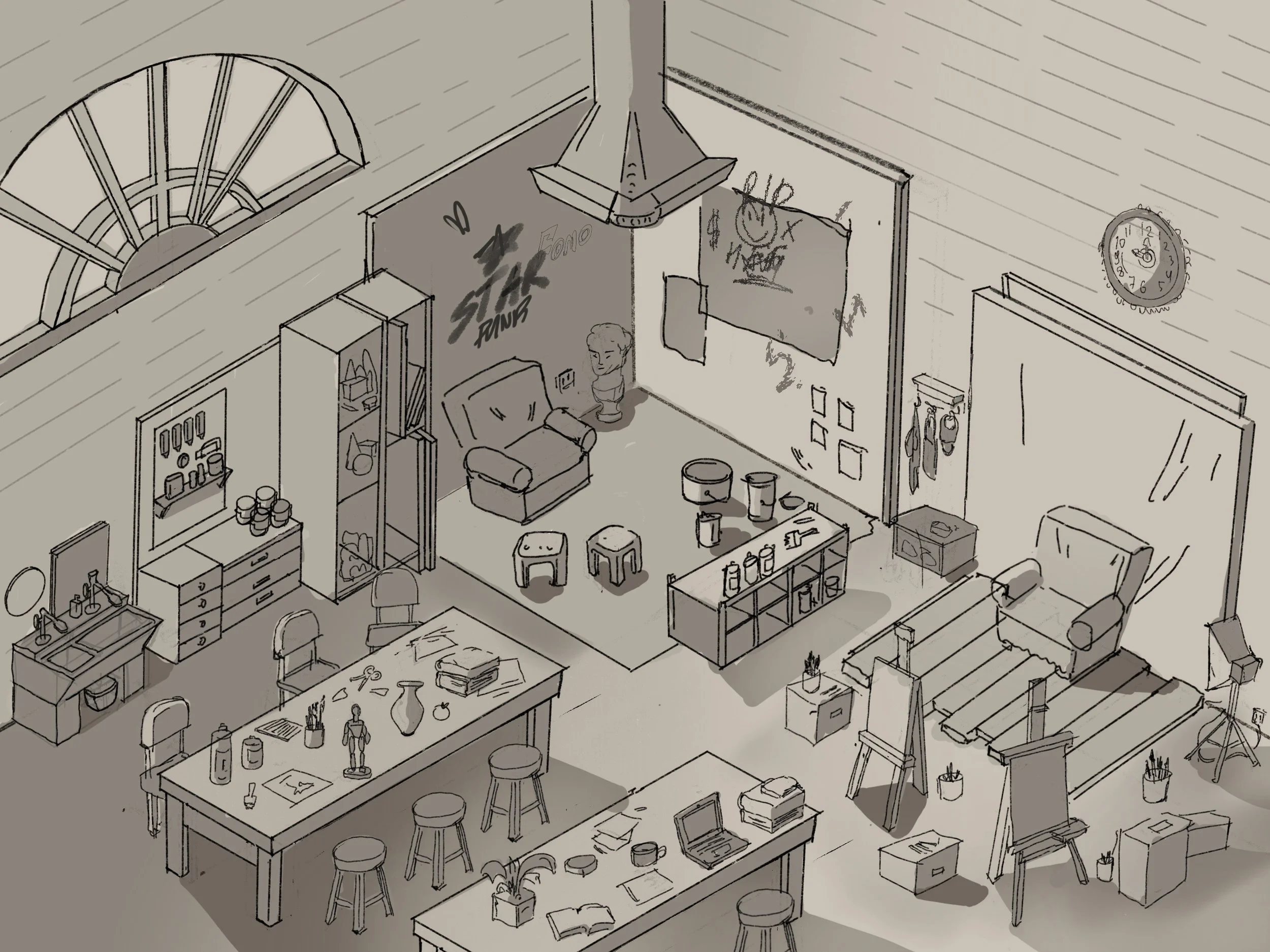
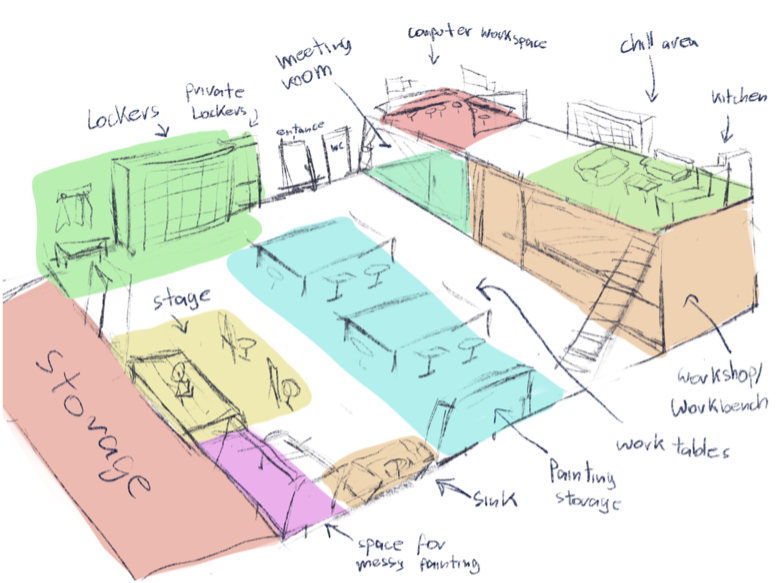
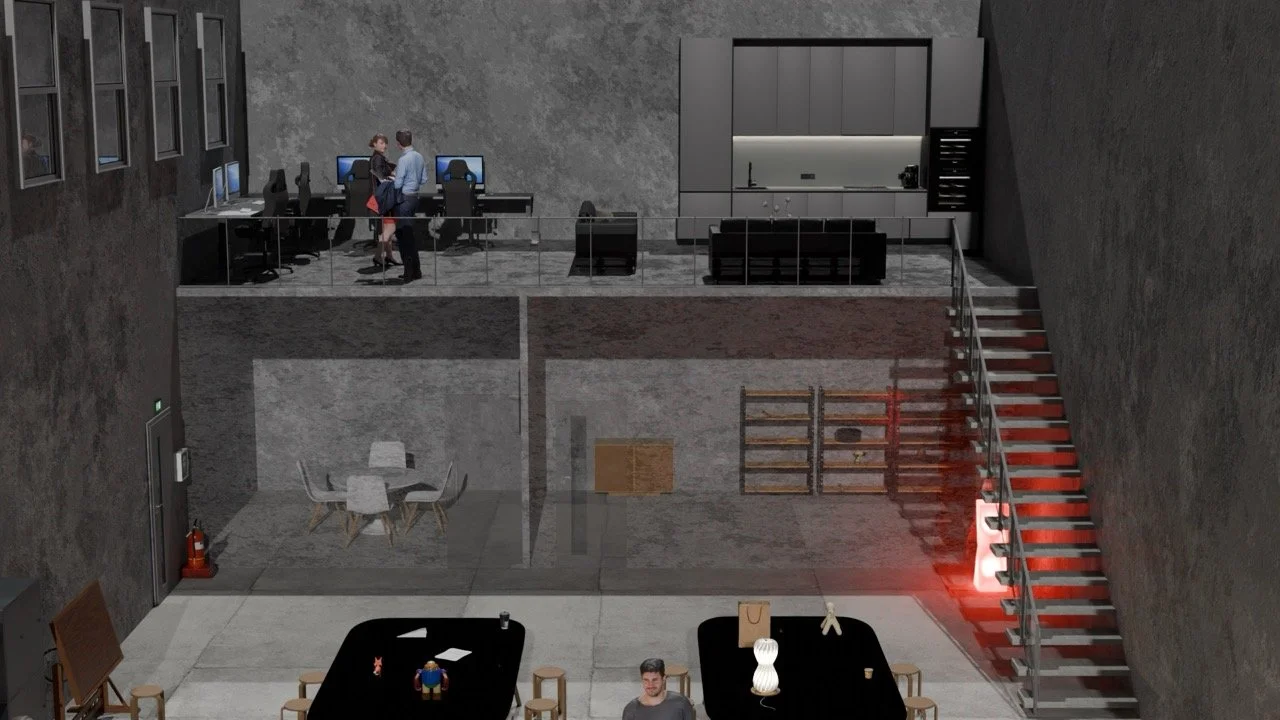
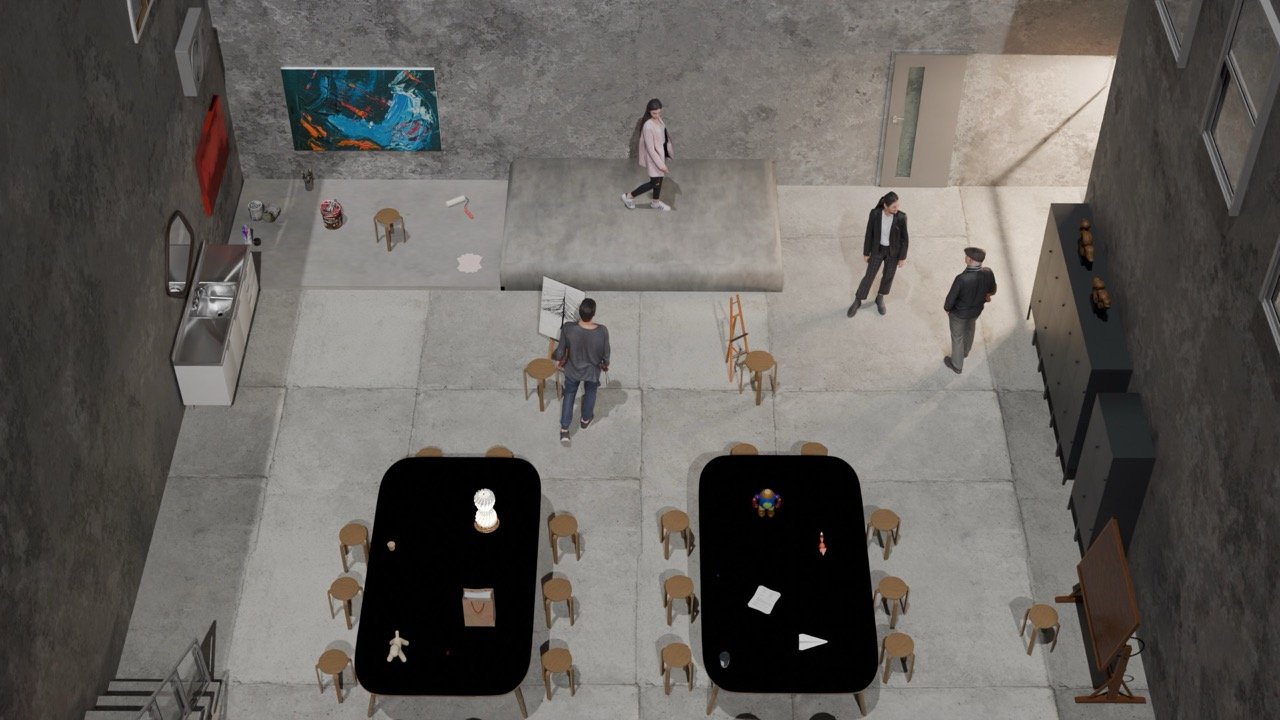
The Open Atelier is a multifunctional creative space designed to encourage artistic exchange, experimentation, and collaboration. It offers a hybrid environment where artists can work independently while remaining open to spontaneous interaction. The space blurs the lines between studio, gallery, and community hub by fostering both focused production and informal creative exchange.
Key features include shared equipment, a dedicated meeting room, flexible work areas, and a well-equipped workshop. The Open Atelier promotes low-barrier access to tools and